
And why most writers misunderstand it until they’ve already lost years.
-
OPENING CONFESSION
The moment nobody prepares writers for
Let’s start at the exact moment this becomes real.
Not theory.
Not philosophy.
A moment.
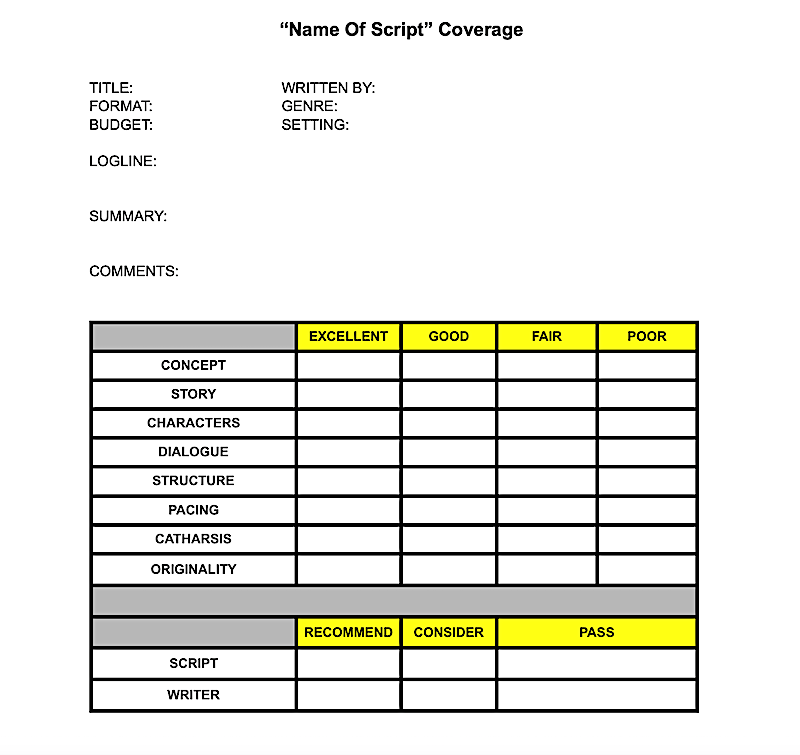
You submit a script for coverage.
You tell yourself you’re calm, but you’re not. You’re alert in a way that feels physical. You refresh your email too often. You pretend you don’t care, but you’ve already imagined three possible outcomes — best case, worst case, and the quiet one in between.
When the notes arrive, you don’t read them.
You scan.
You look for signs before substance.
- “Recommend” or “Pass”
- “Strong voice”
- “Execution issues”
- “Conceptually interesting”
Your body reacts before your brain does.
If the first paragraph feels positive, you relax — briefly.
If it feels critical, something tightens in your chest.
Only after that do you actually start reading.
And somewhere — usually not at the beginning, not at the end, but buried in the middle — you encounter a sentence that feels like it was written about you, not the script.
Not insulting.
Not cruel.
Just precise.
It names something you haven’t wanted to look at directly.
That moment is where script coverage stops being “feedback” and becomes something else entirely.
-
WHY THIS MOMENT FEELS SO PERSONAL
(Even when it shouldn’t)
Writers like to say they’re not sensitive.
They are.
Not because they’re fragile — but because writing is identity-adjacent work. You don’t just produce a script. You live inside it for months or years. Your thinking patterns, your fears, your blind spots all get baked into the work.
So when coverage lands accurately, it doesn’t feel like commentary.
It feels like exposure.
And because that exposure is uncomfortable, writers develop defenses.
They tell themselves:
- “Readers don’t get my voice”
- “This is subjective”
- “They’re imposing taste”
- “They’re missing the point”
Sometimes those defenses are valid.
Often, they’re protective reflexes.
Coverage doesn’t just evaluate the script — it challenges the story the writer is telling themselves about the script.
That’s why it’s so misunderstood.
-
THE FIRST GREAT MISUNDERSTANDING
“Coverage tells me if my script is good or bad”
This is the belief most writers walk in with.
They may not say it out loud, but it’s there:
“Coverage will tell me whether I’m doing okay.”
That expectation alone guarantees disappointment.
Because professional script coverage was never designed to answer:
- “Is this good?”
- “Am I talented?”
- “Should I keep going?”
Those are emotional questions.
Coverage answers diagnostic ones.
And diagnosis doesn’t care about reassurance.
-
WHAT COVERAGE WAS ACTUALLY DESIGNED TO DO
(Historically and practically)
Script coverage didn’t originate as a writer-support tool.
It originated as decision support.
Coverage exists to help producers, executives, and development teams answer questions like:
- Is this story structurally sound?
- Where will this collapse under pressure?
- What will this cost to fix?
- Is the problem conceptual or executional?
Writers were never the original audience.
That’s important.
Because when writers approach coverage as emotional validation, they’re asking it to do a job it was never meant to do.
That mismatch creates resentment on both sides.
-
WHY WRITERS KEEP FEELING “MISREAD”
(This part matters)
Many writers say:
“The reader misunderstood my script.”
Sometimes, that’s true.
But more often, what’s happening is this:
The intent in the writer’s head is not the effect on the page.
Coverage reads effect, not intent.
It responds to:
- What is clear
- What is active
- What is happening now
Not what the writer meant.
Not what the writer planned for later drafts.
Coverage is mercilessly present-tense.
That’s not cruelty.
That’s its function.
-
THE SECOND GREAT MISUNDERSTANDING
“Coverage should tell me how to fix it”
This is where things really go sideways.
Writers often expect coverage to provide solutions:
- Change this character
- Add a subplot
- Cut these scenes
- Raise the stakes
But solutions without diagnosis are useless.
Good coverage doesn’t prescribe blindly.
It reveals why the story behaves the way it does.
Without that understanding, any fix is cosmetic.
You’re rearranging furniture in a house with a cracked foundation.
-
NOTES VS STORY INTELLIGENCE
(This distinction separates amateurs from professionals)
Let’s make this clean.
Notes are observations.
Story intelligence is understanding.
Notes say:
“The pacing feels slow in Act Two.”
Story intelligence asks:
“What decision is missing that would force escalation?”
Notes say:
“The protagonist feels passive.”
Story intelligence asks:
“What is the character avoiding, and why is the story letting them?”
One reacts.
The other explains.
Most coverage fails because it stops at notes.
At BPS, coverage is built around story intelligence — because intelligence scales, and notes don’t.
-
WHY SOFT COVERAGE IS ACTUALLY CRUEL
(Even though it sounds kind)
Let’s say something most services won’t say.
Soft coverage — the kind that cushions every critique — feels humane.
It is not.
Soft coverage delays clarity.
Delayed clarity costs time.
Lost time kills careers quietly.
Writers leave soft coverage thinking:
- “I’m close”
- “One more pass”
- “It just needs polish”
Years go by.
The same script keeps circulating.
The same problems remain untouched.
This is not kindness.
It’s avoidance dressed as encouragement.
-
THE PSYCHOLOGICAL TURNING POINT
When writers stop asking the wrong question
There is a moment — subtle but decisive — when a writer levels up.
They stop asking:
“Do they like it?”
And start asking:
“Is this doing what I think it’s doing?”
That shift changes everything.
Coverage stops feeling like judgment.
It becomes orientation.
The writer stops defending choices.
They start examining them.
That is professional thinking.
-
THE PAUSE
(Do not skip this)
Stop reading for a moment.
Ask yourself — honestly:
- When I order coverage, what am I really hoping for?
- Am I seeking clarity, or permission?
- Do I know what decision my story is actually built around?
- Have I been polishing because I’m avoiding a harder choice?
There is no shame in the answers.
Only information.